
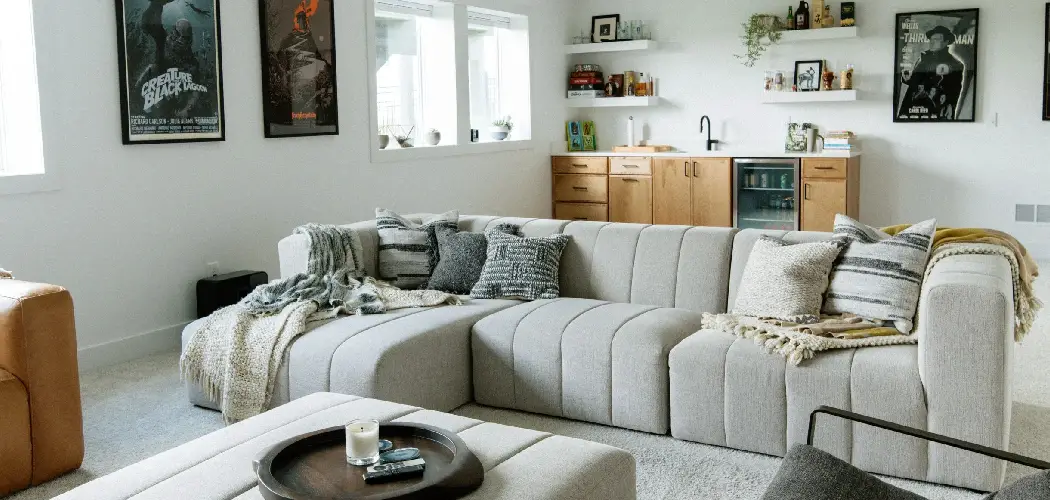
A sectional couch anchors your living room, but the wrong rug placement can make even a beautiful space feel disjointed. Maybe your current rug floats awkwardly in front of the sofa, or it disappears entirely beneath the cushions. Getting it right pulls the whole room together, creating a cozy, intentional look that feels finished rather than thrown together. The good news is that you don’t need an interior designer or a big budget to nail it. Learning how to place a rug under a sectional couch comes down to a few simple rules around sizing, positioning, and balance.
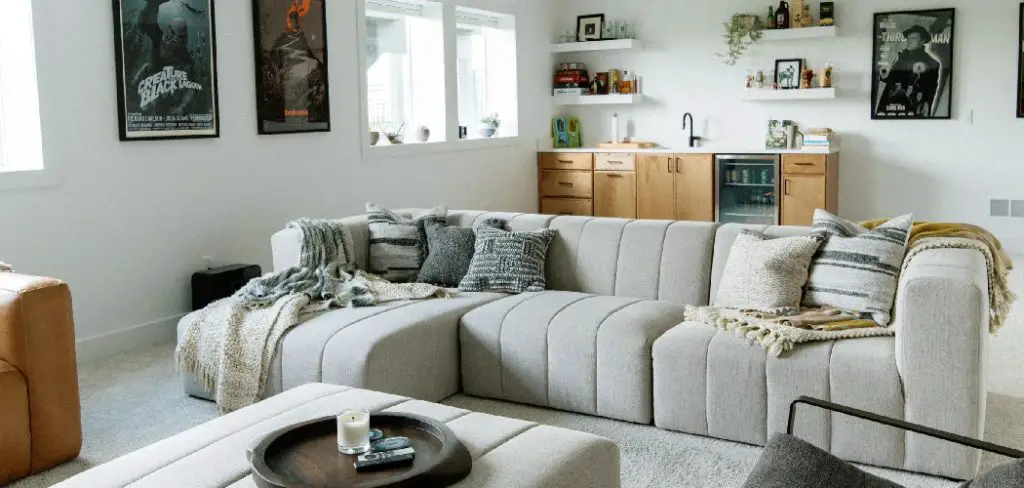
This guide breaks the process into clear, beginner-friendly steps anyone can follow. We’ll cover measuring your space, picking the right rug size, deciding how much furniture should sit on the rug, and keeping everything secure. Whether you have an L-shaped, U-shaped, or modular sectional, you’ll find an approach that works for your layout. By the end, your living room will feel grounded, balanced, and inviting.
Why Placing a Rug Under a Sectional Couch Matters
A well-placed rug does far more than warm up cold floors. It defines your seating area, visually tying the sectional, coffee table, and surrounding pieces into one cohesive zone. This is especially helpful in open-concept rooms, where a rug separates the living space from the dining or kitchen area without needing walls.
Proper placement also adds comfort and protects your floors from scuffs and wear. The right size makes the room feel larger and more put-together, while the wrong size can shrink the space or leave it feeling unbalanced. Beyond looks, a rug absorbs sound, softening echoes in rooms with hard flooring. When you get the positioning right, you create a welcoming spot that feels both stylish and lived-in, and that balance pays off every time you walk in.
Step-by-Step Guide to How to Place a Rug Under a Sectional Couch
Step 1: Measure Your Sectional and Room
Before you shop or shift anything, grab a tape measure and record your sectional’s full dimensions, including the length of each section and how far it extends into the room. Write down the overall footprint so you know exactly how much space the furniture covers.
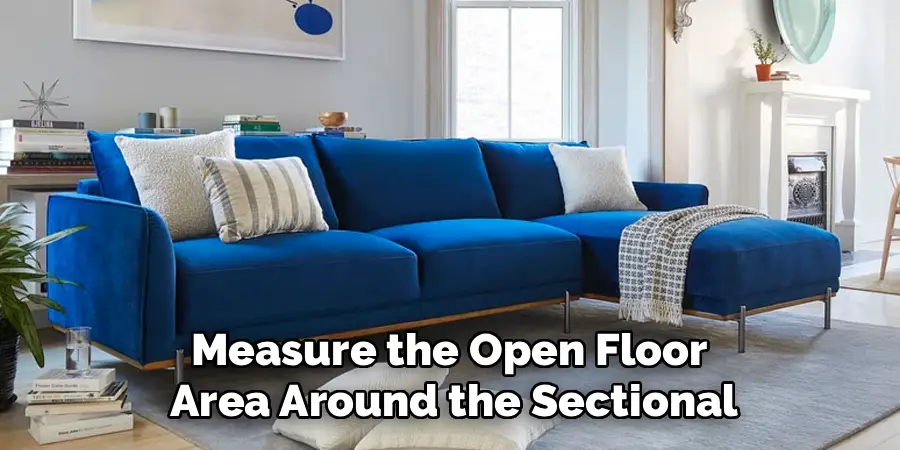
Next, measure the open floor area around the sectional. Note the distance from the couch to walls, windows, and other furniture. These numbers guide every decision that follows, from rug size to positioning. A few minutes of careful measuring now saves you from buying a rug that swims in the space or looks too cramped, so take your time and double-check each figure.
Step 2: Choose the Right Rug Size
Size is where most people go wrong, so choose carefully. As a rule of thumb, your rug should be large enough that the front legs of the sectional rest on it, with the rug extending several inches beyond the couch on the open sides. For most living rooms, an 8×10 or 9×12 rug works well with a standard sectional.
A rug that’s too small floats and makes the room feel disconnected. When in doubt, size up rather than down. The rug should feel like a generous base that anchors the seating, not a small mat lost beneath a large piece of furniture. Match the shape to your layout too, favoring rectangular rugs for most sectionals.
Step 3: Decide How Much Furniture Sits on the Rug
Now choose your placement style, because how much furniture rests on the rug sets the whole tone. The most popular approach when figuring out how to place a rug under a sectional couch is the “front legs on” method, where the front legs of the sectional sit on the rug while the back legs stay off. This creates a connected, balanced look in medium-sized rooms.
For larger spaces, place the entire sectional on the rug for a luxurious, grounded feel. In smaller rooms, you can keep all the furniture off the rug and let it sit in front, though this works best with a generously sized rug. Pick the style that fits your room’s scale.

Step 4: Position the Rug Correctly
With your size and style chosen, lay the rug out and align it with the longest section of your sectional. The rug should run parallel to the main seating, creating clean, straight lines that feel intentional. Center it so the rug extends evenly on both open sides rather than drifting toward one wall.
Leave a consistent border of bare floor around the rug, usually 10 to 18 inches between the rug edge and the walls. This frame of flooring makes the room feel polished and prevents the rug from looking like wall-to-wall carpet. Step back often as you adjust, checking that everything lines up symmetrically from the room’s main entry point.
Step 5: Account for the Chaise or L-Shape
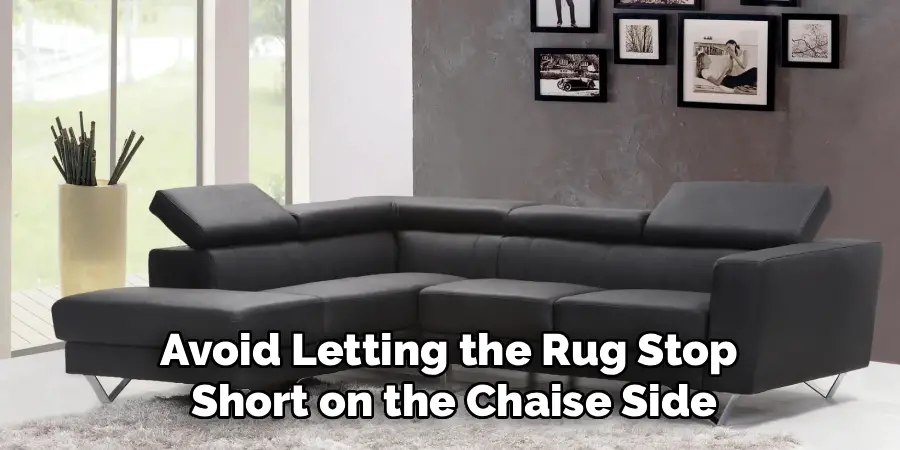
L-shaped and U-shaped sectionals need extra thought, since the chaise extends the footprint in one direction. Knowing how to place a rug under a sectional couch with a chaise means choosing a rug wide enough to reach under or in front of that extended section, keeping the look balanced rather than lopsided.
Position the rug so it tucks slightly under the chaise’s front edge or sits squarely in front of it, depending on your chosen style. Avoid letting the rug stop short on the chaise side, which creates an uneven, awkward gap. If your sectional is modular, plan around its widest configuration so the rug still works if you rearrange the pieces later.
Step 6: Add a Rug Pad for Stability
Once the rug sits where you want it, slide a quality rug pad underneath. A good pad grips the floor and the rug, preventing slips, bunching, and curled corners that can trip you up. It also adds a layer of cushion, making the rug feel plusher and more comfortable underfoot.
Choose a pad slightly smaller than the rug, about an inch shorter on each side, so it stays hidden. Rug pads protect both your flooring and the rug itself, reducing wear from heavy furniture and foot traffic. This small, inexpensive addition keeps everything firmly in place and extends the life of your rug, so don’t skip it.
Step 7: Style and Finalize the Look
Now bring the space together. Position your coffee table in the center of the rug, leaving comfortable walking room between it and the sectional. Make sure the table sits fully on the rug for a balanced, intentional look that ties the seating area into one cohesive zone.
Add accent pieces like a side table, floor lamp, or ottoman, keeping them consistent with your placement style. Smooth out any wrinkles, straighten the edges, and vacuum the rug to set the fibers. Step back and view the room from different angles, adjusting until everything feels symmetrical and inviting. When the rug, sectional, and accessories work together, your living room finally feels complete and welcoming.

Frequently Asked Questions
Should All the Legs of a Sectional Be on the Rug?
Not necessarily. The most common approach places only the front legs of the sectional on the rug, which creates a connected, balanced look while saving on rug size and cost. In larger rooms, placing the entire sectional on the rug feels luxurious and grounded. The right choice depends on your room’s scale and the rug size you have, so consider both before deciding.
What Size Rug Works Best Under a Sectional?
For most living rooms, an 8×10 or 9×12 rug pairs well with a standard sectional. The rug should be large enough that the front legs rest on it and extend several inches beyond the couch on the open sides. When you’re unsure, size up rather than down, since a too-small rug makes the space feel disconnected and unbalanced. Always measure your sectional first.
Which Rug Shape Suits a Sectional Couch?
Rectangular rugs work best for most sectionals because they mirror the clean lines of the furniture and fit naturally in square or rectangular rooms. For L-shaped or U-shaped sectionals, a large rectangle still tends to look most balanced. Round rugs rarely complement the angular shape of a sectional, so save those for round tables or smaller, separate seating nooks elsewhere in your home.
Do I Really Need a Rug Pad?
Yes, a rug pad is well worth the small cost. It grips both the floor and the rug, preventing slips, bunching, and curled corners that create tripping hazards. A pad also cushions the rug for added comfort and protects your flooring from scratches and wear caused by heavy furniture. Choose one slightly smaller than your rug so it stays hidden along the edges.
How Far Should the Rug Be From the Walls?
Aim to leave a border of bare floor between 10 and 18 inches between the rug’s edge and the surrounding walls. This frame of flooring keeps the room feeling polished and prevents the rug from resembling wall-to-wall carpet. In smaller rooms, you can shrink that border slightly, but always keep some visible floor around the rug to maintain a clean, intentional, well-balanced look.
Conclusion
Getting your rug placement right transforms a living room from disjointed to designer-worthy, and it really comes down to a handful of simple choices. By measuring carefully, choosing a generous rug size, deciding how much furniture sits on the rug, and anchoring everything with a quality rug pad, you build a seating area that feels grounded and intentional. Add thoughtful styling with a centered coffee table and matching accents, and the whole space pulls together beautifully.
Now that you know how to place a rug under a sectional couch, you have everything you need to refresh your living room this weekend. Start by measuring your sectional, then pick a rug that fits your layout and placement style. Lay it out, adjust until it feels symmetrical, and enjoy the cozy, polished result. Your living room is ready for its upgrade, so grab that tape measure and get started today.

Rick is a handyman who grew up helping his dad with his business. He learned a lot from him about how to fix things, and also about how to work hard and take care of business. These days, Rick is still into fixing things- only now, he’s doing it for a living.
Rick is always looking for new ways to help people grow and develop. That’s why he started contributing to this blog: to share all his experience and knowledge so that he can help people who are interested in DIY repair.