
A broken garage door spring can bring your day to a sudden halt. That loud bang you heard from the garage wasn’t a firecracker; it was likely one of the most critical parts of your garage door system failing.
Now, your car is trapped, and you’re stuck. The springs are responsible for counterbalancing the immense weight of the door, making it light enough for you or an automatic opener to lift. Without them, you’re trying to lift hundreds of pounds of dead weight. Knowing how to safely navigate this situation is essential. It’s not just about getting your car out; it’s about doing so without causing further damage to the door or, more importantly, injuring yourself.
This guide on how to open a garage door with broken spring will walk you through the process, empowering you to handle this common household problem safely and effectively.
What are the Benefits?
Learning to open a garage door with a broken spring offers several immediate advantages. First and foremost, you regain access to your vehicle and your garage, preventing a major disruption to your schedule. Instead of waiting hours or even days for a technician, you can solve the immediate problem yourself. Second, you can prevent further damage. Trying to force the door open with the automatic opener when a spring is broken can burn out the motor, strip gears, and damage the tracks, leading to much more expensive repairs. Finally, following the correct procedure ensures your safety. Garage doors are heavy and their components are under high tension. Understanding the right way to handle the situation minimizes the risk of the door crashing down or causing personal injury.
What Will You Need?
Before you begin, gather the necessary tools and safety equipment. Having everything on hand will make the process smoother and safer.
- Sturdy Ladder: To safely access the garage door opener and emergency release cord.
- Vise Grips or C-Clamps: To secure the door in place.
- Rope or Strong Cord: To help secure the door.
- Work Gloves: To protect your hands.
- Safety Glasses: To protect your eyes from any debris.
- A Helper: This is strongly recommended. Lifting a garage door without spring assistance is difficult and risky to do alone.
10 Easy Steps on How to Open a Garage Door With Broken Spring
Follow these steps carefully to ensure you open the door safely and without causing additional damage. The key is to be methodical and aware of the door’s weight at all times.
Step 1: Confirm the Spring is Broken
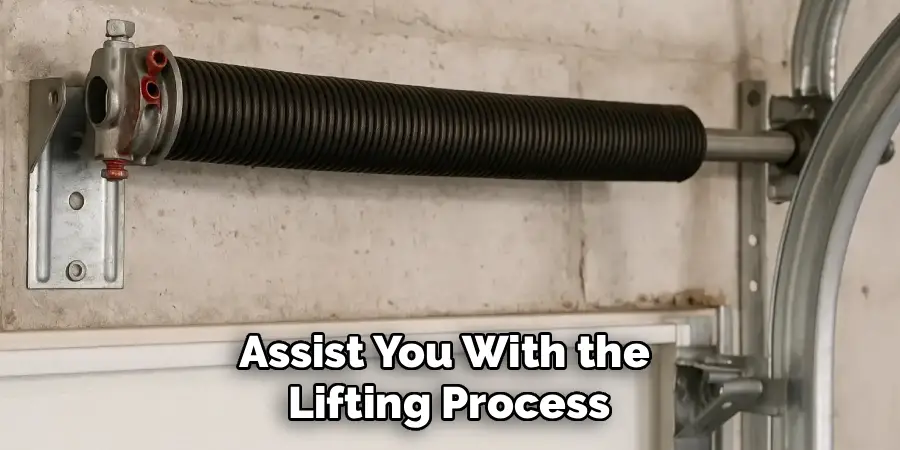
Before you do anything else, you need to be certain that a broken spring is the issue. Look at the metal springs located either above the door (torsion spring) or along the sides of the tracks (extension springs). A broken torsion spring will have a visible gap in the middle of the coil. Broken extension springs will be hanging loose, and you may see a stray safety cable. You may also notice that the garage door opener strains but cannot lift the door, or the door looks crooked as it tries to open.
Step 2: Unplug the Garage Door Opener
Safety is the top priority. Go to your garage door opener motor unit and unplug it from the electrical outlet. This prevents anyone from accidentally activating the opener with the remote while you are working on the door. If the opener is hardwired, you must go to your home’s circuit breaker panel and switch off the power to the garage door opener. This is a critical step to prevent the motor from engaging, which could cause the door to move unexpectedly and lead to serious injury.
Step 3: Disengage the Garage Door from the Opener
With the power off, you need to disconnect the door from the automatic opener’s trolley. Locate the red emergency release cord hanging from the trolley that moves along the opener rail. Pulling this cord will disengage the attachment arm from the trolley, putting the door in manual mode. You should hear a click, and the door will now be free from the opener’s mechanism. Make sure the garage door is fully closed before you pull the cord, as its full weight will be unsupported once disengaged.
Step 4: Find a Helper
Do not attempt this next part alone. A standard two-car garage door can weigh between 200 and 400 pounds. Without the springs to counteract this weight, you will be lifting the full amount. Lifting this much weight by yourself is not only extremely difficult but also dangerous. The door could slip from your grasp and come crashing down. Find at least one strong helper—two is even better—to assist you with the lifting process.
Step 5: Position Yourself for Lifting
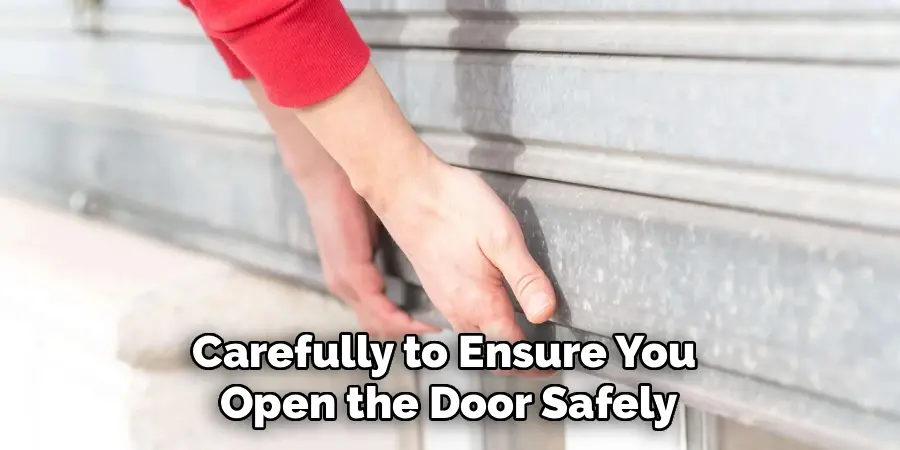
You and your helper(s) should position yourselves to lift the door evenly. If there are two of you, stand at opposite ends of the door. If you have a third person, they can stand in the middle. Bend at your knees, not your back, to get a firm grip on the bottom of the door. Make sure you have a stable footing and are wearing your work gloves to improve your grip and protect your hands. Communicate with your helper(s) so you are ready to lift at the same time.
Step 6: Lift the Door Slowly and Evenly
On a count of three, begin lifting the door together. The initial push from the ground will be the hardest. Lift smoothly and slowly, keeping the door balanced. If one side rises faster than the other, the door could get jammed in the tracks. Maintain communication throughout the lift, ensuring you are moving at the same pace. Lift the door all the way up until it is fully open and horizontal. The horizontal tracks will support most of the weight once it is fully raised.
Step 7: Secure the Door in the Open Position
Once the door is fully open, you must secure it to prevent it from falling. Do not rely on the door staying open by itself. Use your C-clamps or vise grips to clamp onto the vertical tracks on both sides, just below the bottom rollers of the door. This creates a physical stop that will prevent the door from sliding down. You can also place the ladder or sturdy pieces of wood under the door as an extra precaution.
Step 8: Move Your Vehicle
With the door safely secured in the open position, you can now carefully move your vehicle out of or into the garage. Take your time and be mindful of the clamps and any other props you have used to secure the door. Do not bump them. Once your vehicle is clear, you can prepare to close the door.
Step 9: Carefully Lower the Door
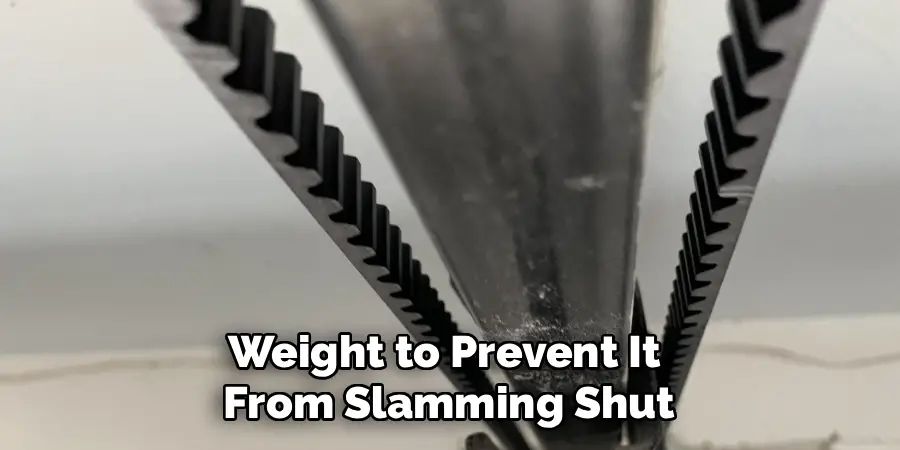
Closing the door is just as dangerous as opening it, as you must control its full weight on the way down. First, remove the clamps or props from the tracks while you and your helper(s) hold the door’s weight. Once you have a firm grip, slowly and carefully guide the door down. Let it descend gradually, resisting its weight to prevent it from slamming shut. Keep your fingers and feet clear of the door’s path.
Step 10: Lock the Door and Call a Professional
Once the door is fully closed, re-engage the garage door opener trolley if you can, but do not plug the opener back in. If you can’t re-engage it, secure the door manually from the inside using the slide lock on the side of the door. This will keep your home secure until the spring is repaired. Do not attempt to use the door again. Now is the time to call a qualified garage door repair technician. Spring replacement is a dangerous task that should only be performed by a trained professional.
5 Things You Should Avoid
- Don’t Use the Opener: Never repeatedly try to use the automatic opener. This can burn out the motor, strip the gears, or damage the door panels.
- Don’t Try to Repair the Spring Yourself: Torsion and extension springs are under extreme tension. A mistake during removal or installation can cause them to snap, leading to severe injury or even death.
- Don’t Stand Directly Under the Door: When lifting or lowering, always keep your body out from under the direct path of the door.
- Don’t Leave the Door Unattended While Open: Never leave the garage door open without it being securely clamped. It could fall at any moment.
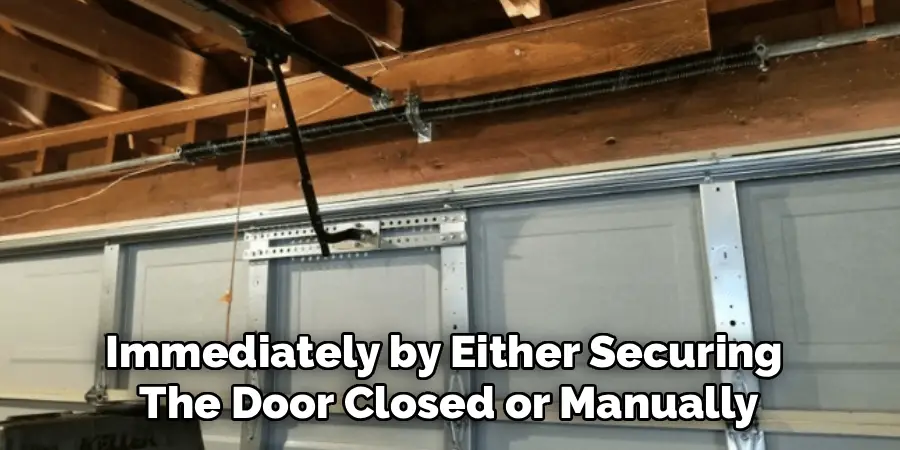
- Don’t Ignore the Problem: A broken spring makes your garage door a significant safety hazard. Address the situation immediately by either securing the door closed or manually opening it and then calling for professional repair.
Conclusion
A broken garage door spring is a major inconvenience, but it doesn’t have to be a disaster.
By understanding the mechanics and following a safe, step-by-step process on how to open a garage door with broken spring, you can manually open your door to get your car out and secure your home. The most important takeaways are to prioritize safety, never attempt the lift alone, and always secure the door properly once it’s open. While this guide helps you handle the immediate problem, remember that spring replacement is a job for experts.
Once your car is free, contact a professional garage door technician to get your door back in safe, working order.

About
Angela is the chief editor of Indoorense. She began her career as an interior designer before applying her strategic and creative passion to lifestyle and home.
She has close to 15 years of experience in creative writing and online content strategy for housekeeping and cleaning,home decorations as well as other efforts.
She loves her job and has the privilege of working with an extraordinary team. She lives with her husband, two sons, and daughter in Petersburg. When she’s not busy working she spent time with her family.